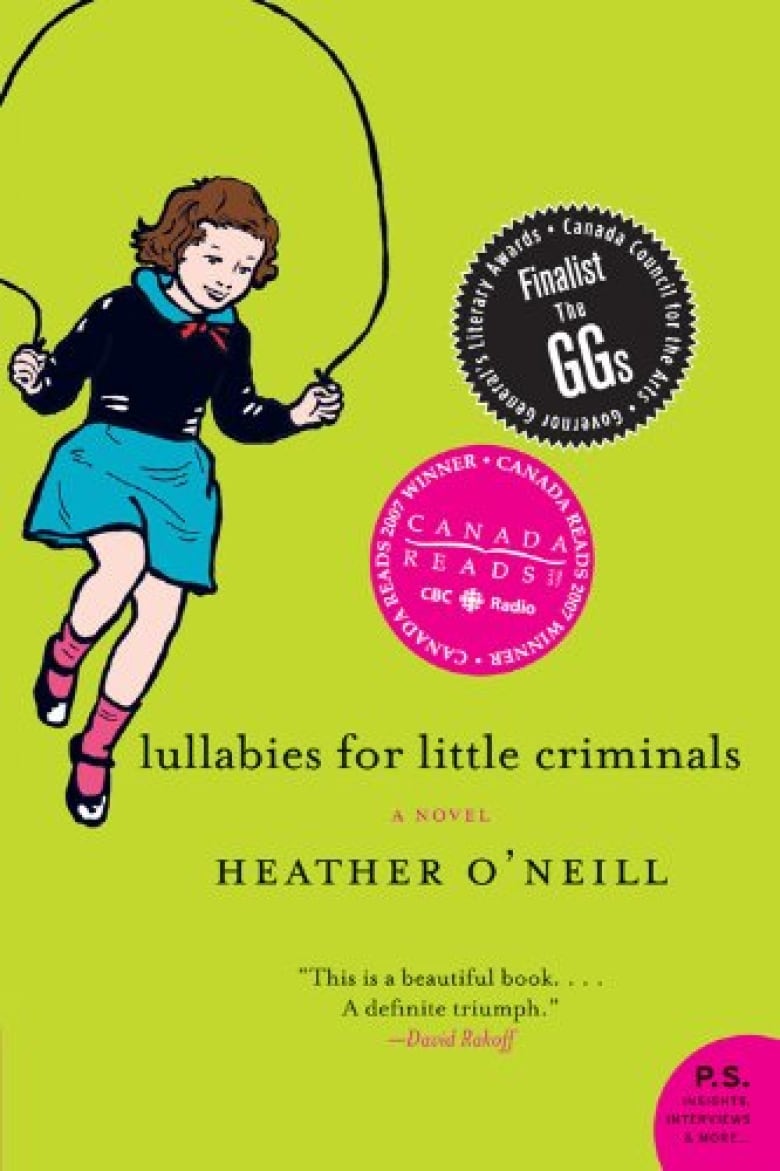
“Childhood is the most valuable thing that’s taken away from you in life, if you think about it.” – Heather O’Neill
Hey guys!
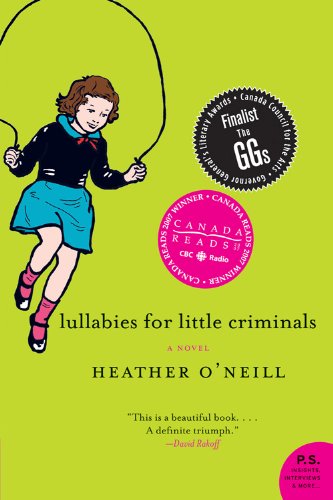
It’s been a while since I’ve last posted, but I’m glad to announce that I’ll be writing a lot more in the next few weeks. While I’ve been away, I started reading the novel Lullabies for Little Criminals by the wonderful author Heather O’Neill. As you can probably guess, I’ll be informing you about my thoughts on what I’ve read so far and some interesting/odd parts that I’ve encountered.
I decided to split my reading into three large chunks, and for each, I’ll be analyzing the novel under different literary theories to bring light to some interesting and mysterious things.

thumbnail/jFnaQEy/videoblocks-white-round-pills-falling-on-dark-surface-animation-of-large-amount-of-tablets_hk7wh5snm_thumbnail-full08.png
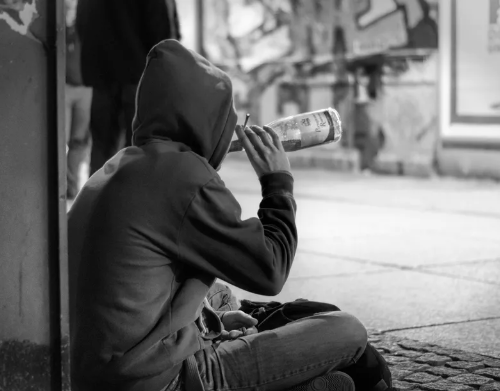
While growing up, I was continually being told that drugs were wrong, that smoking made your lungs die, that swearing was rude and that sex is something you should always stay far away from. I was told this at a very young age, by Health teachers, my parents, my aunts and any other adult I was close with, so naturally, as I was growing up, these topics were something I didn’t pay much attention to. Just like how I was taught this at a young age, I assumed every child would be taught the same.
Yet, in Lullabies for Little Criminals the children who are only 12 years old, are out buying magic mushrooms and doing Heroine, having sex, and are using curse words every few seconds. To me, this is very much not normal, in fact it’s kind of scary, yet to Baby and those living in Montreal, this is as natural as the rain that drizzles down.
Lullabies for Little Criminals follows the main character, Baby and her father Jules, through their journey of life. Motherless, Baby lives with her 27-year-old father Jules, who is continuously having to move from place to place in areas that are not so child-friendly. The novel starts with Jules and Baby moving into a new apartment, which we later see is not a permanent home as they continue to move again. Although moving can be hard, Baby never complains about it and is just grateful that she’s with Jules.

When I was around Baby’s age, I had to move schools as my family, and I were moving to another part of the city. It was incredibly hard to leave everything behind and start fresh, yet Baby was completely fine with it. Her reaction to moving takes me by surprise as I firmly remember being that young and upset over leaving my old life and starting a new somewhere else.
I guess not every child thinks alike or faces the same circumstances.

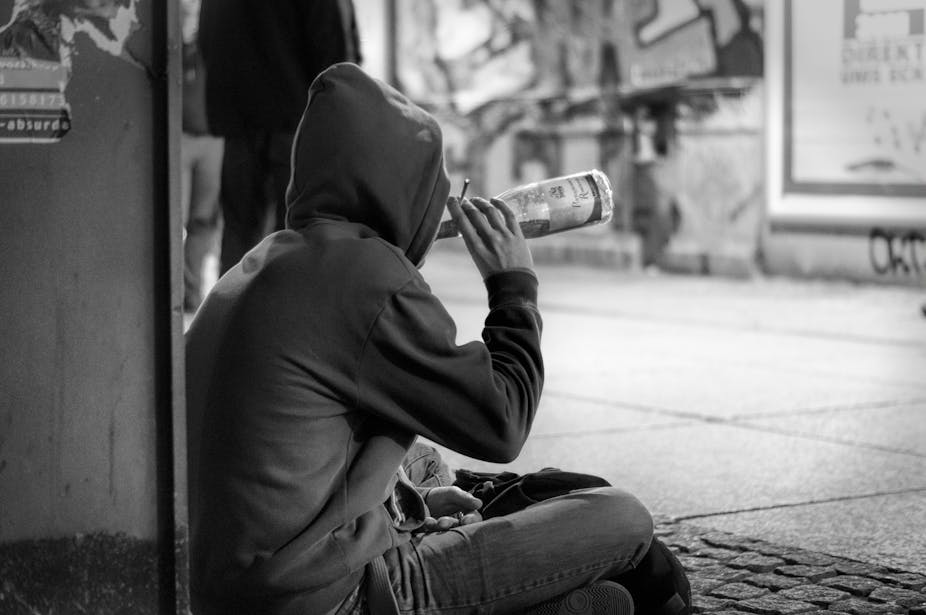
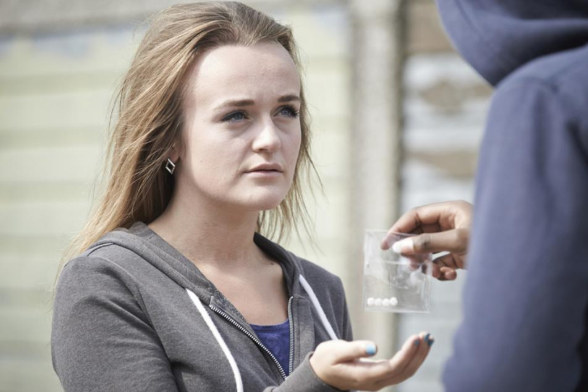
Already by just reading the first few chapters, I can see how Jules isn’t the best person for Baby to be around with. For one, he treats her with no respect and minimal kindness when it comes to him and his drugs. When the book starts, Jules and Baby’s relationship unveils as a sweet relationship between one friend to another. Not father to daughter. Although it was nice to see how they were more open with each other, Jules attitude changed whenever he went after drugs. On his way to buy Heroin one day, he mentions “Baby! Quit following us. Go play with your doll! Get lost, okay?” (O’Neil 11). He was desperate to get his “Chocolate milk” (9), (aka Heroine) and because of that, he spoke very harshly to a 12-year-old girl and left her alone on the streets. He was blinded by the thought of his happiness that he forget about her safety. I feel like this will cause long term problems in both their lives as having drug-addicted parents can have a significant toll on one’s life. I predict that Baby will start looking elsewhere for the attention that her father doesn’t give her, which will only lead her into doing more drug-related things and place her in bad situations.

Through my research for my previous essay and the knowledge I’ve acquired in Biology and human studies, I’ve learned that for most of the time, having drug-addicted parents can have a significant effect on their children. It can influence them from a young age and put them at higher risks of facing psychological problems and substance addiction in their future. As I was reading the part where Baby wanted to try drugs for the sake of getting attention from her father, I felt conflicted as I firmly believe the mushrooms won’t be the end of it.

As the story unveils, Baby and Jules’ relationship falters continuously and is no longer what it used to be. After getting arrested and sent to rehab, he actually stopped doing drugs and was on the right path. However Baby wasn’t happy about that because, after his release he seemed different. “‘Don’t lie to me. You’re sitting there stoned you’re eyes are popping out of your fucking head…I just fucking can’t stand it. You’ve got those fucking junky ways’ “(92). He began to start accusing her of being on drugs and talked to her through a tone of disgust and hate. He would never leave her alone and constantly swear at her for no apparent reason.
Seeing Jules act out like this randomly makes me wonder what triggers it? Whenever I think of his past, I get sent through a spiral of puzzlement. Why is he living like this? Why does Baby have to live like this? Why does he regularly talk bad about his birthplace? Was he a high school dropout? Is that why he doesn’t have a job? Or maybe he’s too focused on drugs that no one will hire him? Or perhaps he’s not interested in earning money from himself and Baby?
.com/files/styles/story_detail_enlarge/public/teen_drug_
addiction.jpg?itok=rXUHMGSx
Whenever Baby speaks, or someone mentions her, I think of her as a tall 17-year-old girl with blonde/ brown hair and big brown eyes. We were never provided with much information on her appearance. However, I can’t help but see her as a 17-year-old girl when she’s actually 12. I think that’s partly because with all the things she knows and has done, I feel weird imaging her as 12. It seems impossible for my brain to comprehend that she’s still a child, who is unfairly and dangerously exposed to a dark world.
This has been one hell of a start, and I’m very much interested in what happens next. Speaking from a reader’s point of view, I feel like the author intended this book for any adolescents as a reminder that stuff like this is real. Falling into drugs, prostitution and being influenced to do horrible thing is possible, it’s not something your parents or teachers are making up. Personally, reading about this stuff made me sympathize with Baby, she’s still so young, yet is caught up with something no kid should have to go through.
Keep checking my blog for more updates on my reading!
-Z.k
Sources:
O’Neill, Heather. Lullabies for Little Criminals.. New York: Harper Perennial, 2006.

 ENG4UE Blog