Welcome back!
For this week’s blog, I’m going to share a little more about Heather O’Neill novel Lullabies For Little Criminals through another literary theory. This time I’m going to analyze the two chunks I’ve read through an archetypal lens to bring light to some of the archetypal characters and symbols observed.
This blog will have a slightly different format than some of my previous blogs. That’s because I’ve decided to split my blog up into two sections: Archetypal characters and Archetypal symbols.
Below, is a video on what and where an Archetype comes from. Feel free to watch it for more insight!
Archetypal Characters

-643,imgsize-738115,resizemode-4/hugs1_gettyimages.jpg
As we’ve explored, Baby doesn’t have a mother as she passed away when Baby was very young. All her life she has grown up with her Father Jules, who’d I’d say is a little too irresponsible when it comes to taking care of a child. Although she doesn’t have an actual mother who looks after her and cares for her, we can see the motherly figure archetype through the character Isabelle, the head of the foster home Baby stayed at while Jules was in the hospital. Isabelle went out of her way to always make sure the kids were enjoying their time and made sure to bring them plenty of toys to play with. After bringing Baby a new toy, Baby states, “I sat next to her on the bed and leaned on her as I played with the pony’s hair. I loved the way that Isabelle could make you feel so lazy” (O’Neill 46). Like any mother, she was caring towards Baby and everyone else. She always looked out for her and was her shoulder to cry on. Baby never seemed to have a woman figure in her life so she took comfort when Isabelle was around.
I’m betting that Alphonse is nothing more than a sneaky, sly trickster who wants to get Baby to do what he wants. When Alphonse is first introduced, he seems perfect to Baby, he has the looks and even dresses nicely. One day when Zoe and Baby were sliding on an old plastic bag, Alphonse came by and “chucked the remains of a bottle of water on us ‘Get your shit together. Jesus Christ, what a fucking sap'” (149). Alphonse thought they were lame, yet later on, when Baby starts dancing like a stripper, he’s caught staring at her and even sends her a pair of knee high socks to encourage her behaviour.

s/9/93/The_Trickster_Devon_Graye-1.jpg/revision/latest?cb=20180120205957
This tells me that he definitely has an ulterior motive; no one would randomly pretend they were interested in someone if they weren’t planning to do something else. He thought she was lame and stupid but then when he saw her dancing he was drawn in. While reading this, I predicted that this meant he wanted her to be a stripper or have sex with him,
And guess what? I was right.
Upon returning from the Juvenile facility Baby’s father sent her at, Alphonse uses her vulnerability and clouded judgement to manipulate her into having sex with him: “He turned off the light before making love to me. His room was dark like a grave. When I closed my eyes, it wasn’t as if he was on top of me…I was making love to the invisible man” (O’Neil 215), Alphonse, did everything he could to get her to hang out with him and “play” with him even though he knew she was just 13. Using her desires, he took advantage of her and didn’t even care what this could mean for her in terms of her losing her virginity, he just did what he wanted without a second thought.
Archetypal Symbols
The doll
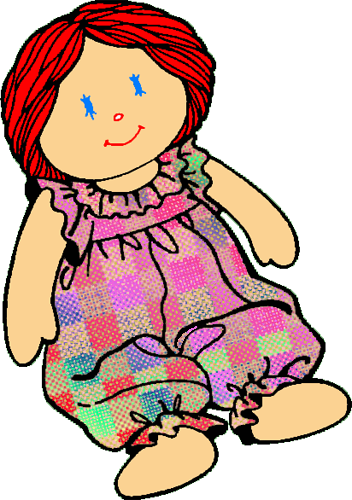
Just by reading the first two-quarters of the novel, I can already begin to understand Baby’s upbringing. She hasn’t grown up with an ideal childhood in which children play with toys and worry about nothing but just having fun. Instead, she faces a sense of poverty and has no proper parental figures from which she can learn from. Her distraught and unfair childhood is represented through the old ragged doll that her mother gave her. I feel like the doll is the only healthy thing in her life that doesn’t seem to be unusual or odd for a 12-year-old to possess. The doll represents her last shred of childhood and what it means to have something to come back to. She never had any siblings or even a mother, so the doll kind of plays the support role. However, in the second chunk, we see Jules rip the doll and cast it aside.
The doll ripping is when I began to realize that Baby’s life will now be different. It felt as if a veil was being removed and now she’s exposed. Not only does this doll help fill in the missing blanks of friendship and companionship, but it’s also a pretty accurate representation of her and Jules relationship. Although the doll is ripped, crummy and old, she loves it with all her heart since that’s the only meaningful thing she has. It’s no different when it comes to Jules. Even though he becomes harsher and on edge, Baby she still loves him as he’s all she knows and the only family she’s got.
Baby’s innocence
From time to time while reading, I’m reminded of Baby’s innocent mind. It seems to be stuck in an adult world, forcing her to grow up quicker than she needs to. Although Baby doesn’t have the best uprising and the best parent, her life wasn’t always tragic and spontaneous. Before she got any ideas of dressing up like the other girls around town, Baby qualified to have an innocent mindset because she still acted immaturely and didn’t know any better between right and wrong, partially because she grew up in an environment where most wrongs were normal.
She didn’t smoke, do drugs, and when told about sex, she stated, “I was still uncomfortable with the idea of sex. When I first heard of French kissing, I thought it was something that only mental patients and the kids who failed grade four would do when they grew up” (O’Neil 16). This shows how she never thought about doing anything against what she believed. At this time, she wasn’t yet exposed to the idea of having sex or becoming a prostitute. Although Baby’s circumstances weren’t like an ideal child’s, her innocent mind helped her stay on the better sides of things. However, Alphonse the trickster, played a very large role in her losing that innocence as he exposed her to adult reality.
Throughout the novel, we see Baby on this long and hard journey. Although her journey is not like that of a hero, Baby still learns new things about herself and the people around her. She goes through many setbacks and hardships with her father and her friends, but even then she continues on.
I’m looking forward to reading the last quarter of the novel and hopefully her journey will end happily.
-Z.K

 ENG4UE Blog